Can Menopause Cause Heart Palpitations at Night?
- Kate Organ

- 11 minutes ago
- 5 min read
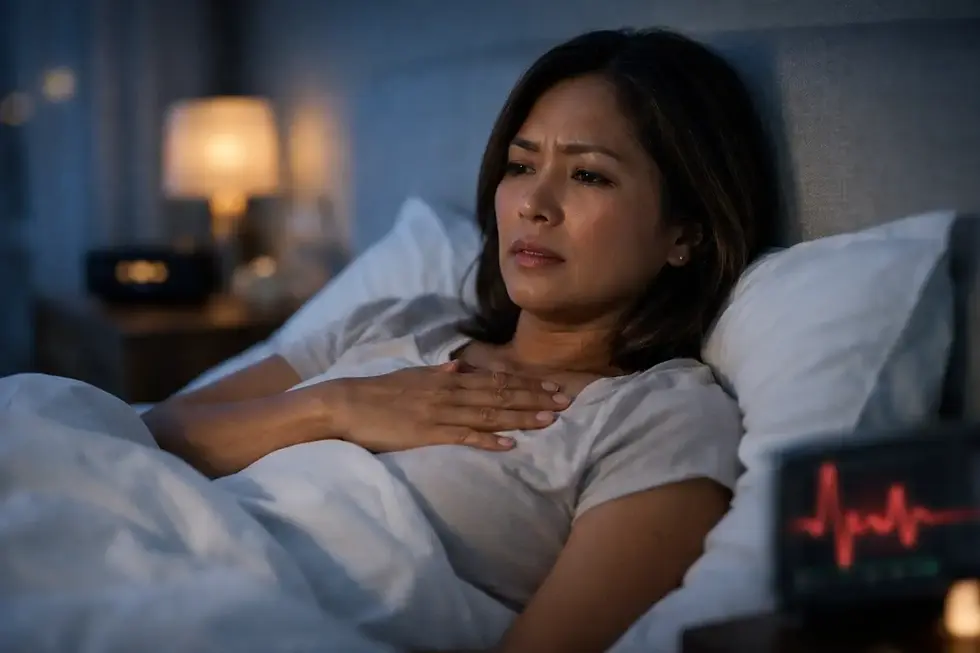
A sudden flutter, thud or racing heartbeat can be particularly unsettling when it wakes you from sleep. Many women describe feeling as though their heart has briefly skipped, flipped or started pounding without warning. If you are wondering, can menopause cause heart palpitations, the answer is yes - hormonal change can be a contributing factor. However, palpitations should never automatically be put down to menopause without considering other possible causes.
Palpitations are common around perimenopause and menopause, but they are not something you have to simply tolerate. A careful assessment can help distinguish a likely hormone-related symptom from a rhythm problem, thyroid condition, medication effect or another health concern that needs attention.
Can menopause cause heart palpitations?
Perimenopause is a time of fluctuating, rather than simply falling, oestrogen levels. These hormonal shifts can affect the autonomic nervous system, which regulates functions such as heart rate, blood pressure, temperature and sweating. For some women, this can make the heart feel more noticeable or trigger episodes of a fast, forceful or irregular-feeling heartbeat.
Palpitations may occur on their own, but they often appear alongside other perimenopause symptoms, including hot flushes, night sweats, disturbed sleep, anxiety, brain fog and changes in periods. A hot flush can cause a rapid heart rate as the body responds to a sudden change in temperature and blood vessel dilation. Waking hot, anxious and aware of a pounding heart can therefore become a distressing pattern.
That said, the sensation of palpitations does not always mean there is an abnormal heart rhythm. Some episodes are caused by normal changes in heart rate or occasional extra beats. Others may be due to an arrhythmia, which is why the nature of the symptom and your wider health history matter.
Why palpitations can feel worse during perimenopause
Hormones are rarely the only factor. Perimenopause can lower the threshold for several triggers that make palpitations more likely or more noticeable. Poor sleep, for example, can increase stress hormones and leave the nervous system more reactive. Night sweats may lead to repeated waking, dehydration and a racing heartbeat.
Anxiety can also be both a symptom and an amplifier. This does not mean the palpitations are "all in your head". It means the body’s stress response can interact with hormone fluctuations, creating very real physical sensations. Some women first experience significant anxiety or panic-like symptoms in perimenopause, even if they have never previously considered themselves anxious.
Caffeine, alcohol, nicotine and dehydration are common triggers. So too are large meals, low blood sugar, intense exercise, illness and some over-the-counter remedies, including decongestants. If symptoms are occurring frequently, a short diary of timing, food and drink, sleep, flushes, menstrual changes and medications can provide useful clinical clues.
The role of thyroid, iron and other health conditions
Not every palpitation in midlife is hormonal. An overactive thyroid can cause a fast heart rate, tremor, sweating, anxiety and weight change, symptoms that may overlap with menopause. Iron deficiency anaemia, low vitamin B12, infection, diabetes, electrolyte disturbance and certain heart conditions can also contribute.
Your clinician may consider blood tests based on your symptoms and medical history. In women over 45 with typical perimenopause symptoms, routine hormone blood tests are not usually needed to diagnose perimenopause, as levels fluctuate considerably. Testing may be more relevant in younger women, those using hormonal contraception, those with uncertain symptoms, or where early menopause or primary ovarian insufficiency is a possibility. Blood testing should be targeted, interpreted in context and never used in isolation.
What do menopause palpitations feel like?
Palpitations can feel different from person to person. You may notice a fluttering in the chest, a brief pause followed by a hard beat, a fast pulse, pounding in the neck or chest, or an awareness of the heart beating while resting. Episodes may last seconds, minutes or occasionally longer.
The pattern matters. A brief skipped-beat sensation during a hot flush may be managed differently from a sustained rapid pulse occurring at rest. It is helpful to note whether your heartbeat feels regular but fast, or irregular and unpredictable, and whether symptoms are linked to exertion, meals, alcohol, stress or night sweats.
Smart watches can sometimes provide useful information about pulse rate, but they cannot reliably diagnose every heart rhythm issue. Do not rely on a device result alone, especially if you are feeling unwell.
When should you seek urgent medical advice?
Most palpitations are not dangerous, but it is sensible to take new or persistent symptoms seriously. Seek urgent medical help if palpitations occur with chest pain, pressure or tightness; severe breathlessness; fainting or near-fainting; new confusion; marked dizziness; or pain spreading to the arm, jaw, back or shoulder.
You should also arrange a prompt medical review if palpitations are frequent, last for several minutes, are worsening, occur during exercise, or you have a known heart condition, high blood pressure, diabetes, thyroid disease or a strong family history of early heart disease. These symptoms deserve assessment regardless of whether you are also in perimenopause.
A GP or specialist may check your pulse and blood pressure, review medicines and arrange an ECG. If episodes come and go, a longer heart monitor may be needed to capture the rhythm while symptoms are happening. This is an important part of providing reassurance safely rather than assuming a hormonal explanation.
Can HRT help heart palpitations in menopause?
If palpitations are closely associated with perimenopause symptoms such as flushes, sweats, sleep disruption and anxiety, treating the underlying hormonal transition may help some women. Hormone replacement therapy, or HRT, is an effective treatment for many menopausal symptoms and can reduce flushes and night sweats that may be provoking a racing heartbeat.
However, HRT is not a treatment for an undiagnosed heart rhythm problem, and it should not be started solely to treat palpitations without an individual assessment. The right approach depends on your age, stage of menopause, symptoms, personal and family history, blood pressure, migraine history, clotting risks and any existing medical conditions.
There is no one-size-fits-all HRT prescription. The type of oestrogen, dose and route of administration may need adjusting, and progesterone choice can matter too. Some women feel better with a change in regimen, while others may need non-hormonal support or investigation of another cause. Specialist care allows time to consider these factors properly, in line with current NICE guidance and your own treatment preferences.
Practical steps while you arrange an assessment
If you are not experiencing red-flag symptoms, small changes may reduce the frequency or intensity of palpitations. Prioritise regular fluids, particularly if you are waking sweaty, and avoid excessive caffeine or alcohol for a few weeks to see whether your pattern changes. Regular meals with protein and fibre can help avoid the sharp energy dips that some women find triggering.
Supporting sleep is equally worthwhile. A cool bedroom, breathable bedding and a consistent wind-down routine may reduce night sweats and the alert, adrenaline-fuelled feeling that follows them. Gentle activity, such as walking, strength training or yoga, can support cardiovascular health and mood, although new palpitations brought on by exercise should be assessed before you push through them.
Try not to dismiss symptoms because you are busy, stressed or have been told that menopause is something to endure. You deserve a clear explanation, appropriate safety checks and treatment options that reflect the full picture of your health.
At The Menopause Specialists, our consultations provide the time to explore symptoms, relevant medical history, lifestyle factors and evidence-based treatment choices in detail. If palpitations are affecting your sleep, confidence or daily life, please visit our consultations page to arrange personalised support.